Sift Get the app
Introduction
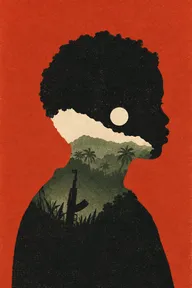
War did not just take his childhood. It taught him to kill.
Ishmael Beah's memoir is unforgettable because it refuses distance. It starts with a boy who loves rap music, talent shows, and joking with friends, then shows exactly how civil war in Sierra Leone turns that same boy into a child soldier.
What makes the book matter is not only the horror. It is the precision with which Beah shows how fear, hunger, grief, drugs, and belonging can reshape a human being, and how fragile the path back to personhood really is.
Chapters 1 to 3
War arrives slowly, then all at once
At first, war reaches Beah as rumor. Refugees pass through his town in Sierra Leone carrying stories too awful for children to absorb: burned houses, massacred relatives, children who jump at harmless sounds. He is still a boy obsessed with hip-hop, memorizing Run-D.M.C. and Eric B. & Rakim lyrics with his brother Junior and friends, dressing in baggy clothes, and preparing for talent shows. The innocence matters because the book insists that ordinary children do not start as monsters.
The break comes suddenly. Beah, Junior, and a friend leave home for a performance in Mattru Jong and, while away, hear that rebels have attacked their town, Mogbwemo. They wait at the wharf for news of their families and instead watch the war materialize in bodies: a man whose family has been shot inside his vehicle, a mother carrying a baby killed on her back, wounded civilians stumbling through villages in shock. The war is no longer rumor or politics. It is blood, confusion, and family separation.
Beah also punctures any romantic language about revolution. Adults call it a liberation struggle against corruption, but what he sees are civilians gunned down and villages emptied by terror. That contrast between ideology and what actually happens on the ground runs through the whole memoir.
“What kind of liberation movement shoots innocent civilians, children, that little girl?”