Sift Get the app
Introduction
Why intense focus can coexist with ADHD
You can disappear into an interesting project and still struggle to empty the trash. Hallowell and Ratey examine that contradiction, showing how attention can become unreliable even when effort and talent are abundant.
1. A spectrum of traits
Attention changes with stimulation
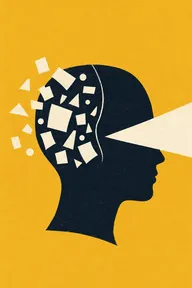
ADHD can make attention wildly inconsistent. A person who forgets a routine obligation may become absorbed in an urgent problem for hours. Hallowell and Ratey describe a powerful engine with inadequate brakes: the challenge is regulating attention and impulses, while preserving whatever strengths the individual possesses.
Their example of a husband walking past the trash captures the misunderstanding. He can forget the request during the few seconds it takes to reach the bin. His spouse sees disregard; the authors see a possible failure of working memory. They also describe time experienced as “now” and “not now,” which helps explain why distant deadlines fail to prompt action until they become emergencies.
The authors introduce variable attention stimulus trait, or VAST, for ADHD-like patterns associated with modern overstimulation. VAST is their descriptive term, without formal diagnostic criteria. Recognizing yourself in these descriptions warrants investigation rather than self-diagnosis. The book’s diagnostic appendix requires impairment across settings and several symptoms before age twelve; an adult diagnosis can follow years of compensating successfully.
Takeaway
Investigate inconsistent performance before treating it as evidence of poor character.