Sift Get the app
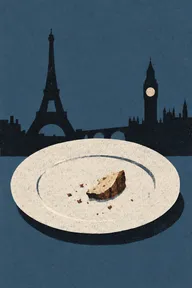
Introduction
Poverty is less dramatic and more degrading than most people think
George Orwell does not write about poverty as a grand moral abstraction. He writes about bedbugs, watered wine, pawnshops, twelve-mile walks to the spike, seventeen-hour kitchen shifts, and the peculiar shame of having to lie about lunch because you cannot afford one.
That is what makes this book hit so hard now. It shows poverty not only as lack of money, but as a machine that steals time, dignity, sleep, appetite, honesty, and even your sense of what is normal. Orwell's real subject is not misery alone. It is how a whole society learns to accept needless degradation as ordinary.
Paris slum
Poverty first appears as dirt, noise, and broken routines
Orwell begins in the rue du Coq d'Or, a Paris slum where every surface seems to carry evidence of collapse. Hotels are infested with bugs, quarrels spill from windows at dawn, and tenants live in bizarre, compressed arrangements that erase privacy and ordinary standards. The point is not local color. It is that poverty creates an environment where eccentricity, filth, and instability stop looking exceptional.
The Hotel des Trois Moineaux is full of people who are poor in radically different ways: a Bulgarian theology student making shoes at night, a Russian mother darning socks for pennies while her son loafs in cafes, a sewer worker broken by prison and bad luck, and a drunk Englishman who organizes his life around cheap wine. Orwell notices that poverty frees people from ordinary standards of behavior just as money frees other people from work.
“Poverty frees them from ordinary standards of behaviour, just as money frees people from work.”
That opening matters because it strips poverty of romance. It is not noble simplicity. It is a social climate that distorts how people live, what they tolerate, and what they become used to.