Sift Get the app
Introduction
Elon Musk did not build companies. He built a mission stack.
This biography makes Elon Musk legible by showing that Tesla, SpaceX, and SolarCity were never random bets. They were pieces of one worldview: sustainable energy on Earth, a backup for humanity off Earth, and a refusal to accept that the future had to be smaller, slower, and more compromised.
Ashlee Vance gets past the cartoon. You see Musk as visionary and brute, inspiring and punishing, absurdly ambitious and often technically right. The result is not a hero story. It is a close look at what happens when one person tries to bend multiple hard industries around a single idea of the future.
Elon's World
Musk turned grandiose goals into an operating system
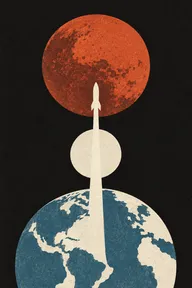
Musk's stated purpose is unusually plain: help humanity become a multiplanetary species, while also pushing the world toward sustainable energy. Vance shows that this was not a branding line added after success. It became the organizing logic behind SpaceX, Tesla, and SolarCity, and it gave employees a reason to endure brutal schedules, impossible deadlines, and constant pressure.
“I would like to die thinking that humanity has a bright future.”
That mission also helps explain why Silicon Valley treated Musk like a demigod even when outsiders saw him as a hype machine. By 2012, SpaceX had flown cargo to the International Space Station, Tesla had delivered the Model S, and SolarCity was booming. Musk had landed meaningful advances in space, cars, and energy almost simultaneously.
Vance's key insight is that Musk thinks less like a normal CEO and more like a general. He does not want incremental wins or elegant positioning. He wants industrial capacity, technical breakthroughs, and enough momentum to make entire systems obsolete. That is why he feels larger than a founder and more like a force field around several industries.