Sift Get the app
Introduction
Cheap fast food is expensive in all the places you do not see
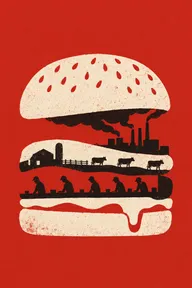
A burger, fries, and a soda look like convenience. Schlosser shows they are really the visible tip of a system that reshaped American work, farming, marketing, public health, and even the design of our towns.
What makes the book stick is not moralizing. It is reporting. You get the founders, the factories, the ranches, the slaughterhouses, the ad campaigns aimed at kids, and the government choices that made the whole machine possible. The real price of a value meal never appears on the menu.
Introduction
Fast food became the operating system of modern America
Schlosser opens with an unforgettable image: pizzas delivered to the bunker inside Cheyenne Mountain, the nuclear-hardened command center of American military power. That is his point in miniature. Fast food is not just a meal. It is woven into the infrastructure of everyday life, from schools and hospitals to airports, highways, and military bases.
The growth is staggering. Americans spent about $6 billion on fast food in 1970 and more than $110 billion by 2000. McDonald’s alone became a giant purchaser of beef, pork, potatoes, and chicken, the world’s largest owner of retail property, and one of the country’s biggest employers. Schlosser’s deeper claim is that fast food did not simply respond to social change. It accelerated it, standardizing products, flattening regional differences, and making franchised sameness feel normal.
That same logic spread beyond food. The franchise model, the obsession with uniformity, and the search for low-skill labor became a template for the wider service economy. Fast food is the lens Schlosser uses to explain how America came to value convenience, conformity, and price above almost everything else.