Sift Get the app
Introduction
Your weight problem is not a willpower problem
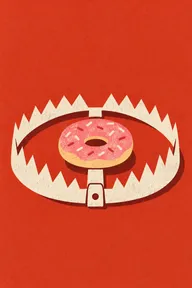
Allen Carr’s core move is simple and provocative: stop treating overeating as proof that you love food too much, and start treating it as a trap built by processed food, sugar, habit, and what he repeatedly calls brainwashing.
Instead of calorie counting, target weights, and white-knuckle restraint, he offers a different promise: if you relearn what real hunger feels like and rebuild your taste around natural foods, losing weight stops feeling like punishment. Whether or not you buy every nutritional claim, the book’s real force is psychological. It tries to remove the sense of deprivation that makes most diets fail.
The key
Overeating is the real problem, not eating
Carr starts by separating eating from overeating. Eating is one of life’s great pleasures. Overeating is not. His test is brutally practical: if you regularly end meals feeling bloated, guilty, tight-bellied, and vaguely helpless, that is not pleasure. It is the same confusion he saw in smokers, who think they love cigarettes when in fact they hate being without them.
That analogy drives the book. Carr says overeaters make the same mistake smokers do. They assume the problem is that they enjoy the thing too much, when the real issue is dependence and conditioning. In his view, junk food and especially processed sugar create cravings, and diets make those cravings worse by turning forbidden food into treasure.
So his first move is psychological, not nutritional. Keep eating normally while reading. Do not start a restrictive plan. If weight loss begins with sacrifice, misery, and willpower, he thinks you have already stepped into the trap that causes yo-yo dieting.
“Eating is a pleasure. Overeating is a pain.”