Sift Get the app

Introduction
Your beliefs about talent quietly shape your whole life
The difference between people who shrink from challenge and people who grow through it often starts with one belief: are your abilities fixed, or can they be developed? Dweck argues that this assumption drives how you handle failure, effort, criticism, relationships, parenting, school, and leadership.
What makes Mindset powerful is that it does not stay abstract. It moves from classrooms to sports, from marriage to business, and shows how the fixed mindset turns life into a constant test, while the growth mindset turns life into a process of development.
The mindsets
Two beliefs create two different lives
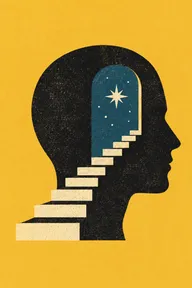
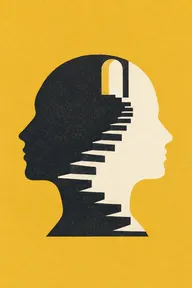
Dweck’s core distinction is simple. In a fixed mindset, your intelligence, personality, and talent are basic traits you need to prove. In a growth mindset, those same qualities can be cultivated through effort, strategy, and help from others. The mindset you carry changes what success means, what failure means, and whether effort feels noble or humiliating.
She first saw this in children tackling hard puzzles. Some kids crumbled when problems got difficult. Others leaned in. One ten-year-old rubbed his hands together and said, “I love a challenge!” Another looked up while sweating over the puzzle and said, “I was hoping this would be informative!” Those children did not see struggle as evidence of low ability. They saw it as the path to getting smarter.
“I love a challenge!”
That one difference ripples everywhere. In a fixed mindset, every class, conversation, and performance asks, Will I look smart or dumb? In a growth mindset, the question becomes, What can I learn here? Dweck’s claim is not that talent does not matter. It is that your starting point is not your destiny, and treating it like destiny warps your behavior.
Takeaway
When ability is something to prove, life becomes a test. When ability is something to build, life becomes practice.