Sift Get the app
Introduction
Behind palace walls, wealth does not protect women from male rule
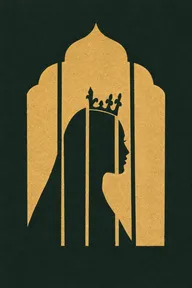
This book lands because it breaks one of the strongest illusions outsiders hold about Saudi royalty: that luxury softens oppression. In Princess, a Saudi royal woman speaking as Sultana describes a life of palaces, servants, planes, jewels, and absolute confinement inside rules made by fathers, brothers, husbands, and clerics.
What makes the story hard to shake is not just the spectacle of royal life. It is the precision of the control. Girls are married off for family advantage, women are punished for the crimes of men, foreign maids are treated as disposable bodies, and even a princess learns that money cannot buy basic autonomy. The book reads like testimony from inside a sealed system.
Introduction
A princess introduces herself as someone born free and then chained
Sultana begins with a blunt contradiction: she is a princess in the House of Al Sa'ud, yet she calls herself a woman in chains. Her opening claim is not that Saudi women suffer from poverty or lack of luxury. It is that a woman's worth is measured first by the presence or absence of a male organ, and that this logic shapes family life from birth onward.
She places her own story inside the rise of the Saudi state. Her grandfather Abdul Aziz recaptured Riyadh in 1902, later forged the kingdom, and married hundreds of women, producing more than fifty sons and eighty daughters. By 1991, she says, the extended royal family had roughly twenty one thousand members, with about one thousand direct descendants of Abdul Aziz. Power in the kingdom sits inside this male lineage.
Sultana is careful to separate Islam from the culture built in its name. She insists the cruelty she describes comes less from the Prophet Mohammed's teachings than from men who chose tribal control over religious fairness. That distinction matters because the book is not a rejection of faith. It is an indictment of a society that uses faith, honor, and secrecy to keep women invisible.
Takeaway
The book's central tension is set immediately: elite status can coexist with total personal powerlessness.