Sift Get the app
Introduction
Why enough keeps feeling like too little
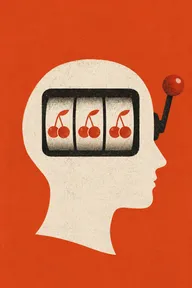
The same pattern that keeps gamblers spinning also appears in shopping, snacking, and scrolling. Michael Easter follows its trail from Las Vegas to Baghdad, asking why satisfaction disappears and what makes stopping possible.
1. The scarcity loop
Three conditions make another round irresistible
A behavior becomes especially hard to stop when it combines opportunity, unpredictable rewards, and quick repeatability. Easter calls this the scarcity loop. Slot machines expose its mechanics because designers can adjust each condition and measure how long people play.
Around 1980, gambling entrepreneur Si Redd helped transform slots through digital screens and more betting lines. Players received frequent payouts, including returns smaller than their original bets. Casinos call these “losses disguised as wins.” Celebratory sounds made a fifty-cent return on a dollar feel rewarding. Spin buttons also accelerated play from roughly 300 to 900 games an hour.
The loop can provide enjoyable entertainment; Easter sometimes plays with a fixed $40 budget. Trouble develops when repetition outruns intention. To interrupt it, change one condition: remove the opportunity, make the rewards less compelling, or slow the next round. Those are more concrete interventions than simply promising better self-control.
Takeaway
Look for opportunity, unpredictable rewards, and quick repeatability wherever stopping feels difficult.