Sift Get the app
Introduction
A dream house turns into a siege
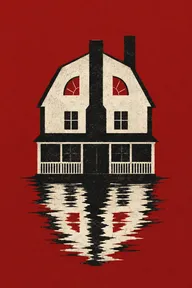
The Amityville Horror works because it is not built like a ghost story about a crumbling castle or a reckless skeptic. It starts with a young family buying a beautiful waterfront house at a bargain price, knowing a mass murder happened there, and assuming that history is just history.
What follows is less a chain of jump scares than a steady collapse of ordinary life. Sleep breaks down. Parenting breaks down. Marriage breaks down. The book keeps asking the same unnerving question: if a place can distort mood, perception, and behavior, how would you know when fear is irrational and when it is trying to save you?
Preface and setup
The book frames the haunting as a test of belief
The opening pages do not start by proving ghosts. They frame the case as a clash among three ways of interpreting the world: strict scientific skepticism, raw superstition, and a religious view that accepts science but leaves room for realities beyond it. Reverend John Nicola argues that each stance has its own prejudice, and that families caught in psychic phenomena suffer most when outsiders arrive with certainty instead of humility.
That frame matters because the story is presented as documentary rather than fiction. Jay Anson leans on testimony from George and Kathy Lutz, Father Frank Mancuso, and police contacts, then asks the reader to sit inside uncertainty. The real pressure of the book is not just whether something paranormal happened. It is what happens to a family when no explanation seems to fit their experience well enough to help them.
Takeaway
The book is built around a live question, not a solved one: what do you call events that feel real, damage real people, and still resist ordinary explanation?