Sift Get the app
Introduction
Why you react before you can think
You know how you want to behave, then a careless remark sends you somewhere else. Steve Peters gives that inner conflict a name and a management plan, beginning with a surprising distinction between feelings and instructions.
The psychological mind
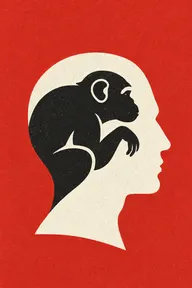
Give your emotional reactions a separate identity
An unwanted reaction can feel like proof of a defective character. Peters offers another interpretation through three characters: the Human, which reasons deliberately; the Chimp, which interprets through emotion; and the Computer, which stores beliefs and runs learned responses. He explicitly presents this as a simplified working model rather than an accurate anatomical map.
The Chimp can protect you or misread a harmless event as danger. Rob, waiting for his girlfriend Sally at the cinema, assumes her lateness means disrespect. He attacks before learning that she stopped to help someone injured in the street.
The practical distinction is between an impression and an established fact. Treat the feeling as information to examine before acting. Separating yourself from the reaction reduces self-condemnation, while leaving you responsible for what you do.