Sift Get the app
Introduction
Your worst luck may be telling the truth about your life
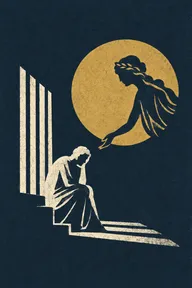
Boethius wrote this in prison while waiting to be executed. Instead of giving us a diary of despair, he stages a confrontation between a broken self and Lady Philosophy, who forces him to ask harder questions: What is happiness? Why do bad people prosper? What can fate control, and what remains free?
That is why the book still lands. It is not a generic comfort text. It is a ruthless audit of the things people mistake for the good life: money, status, power, fame, pleasure, even outrage at injustice. What remains after that audit is a sterner consolation, but also a sturdier one.
Book I
Suffering begins as confusion about what matters
The book opens with Boethius grieving in prison, certain that Fortune has betrayed him. He has lost office, reputation, wealth, and safety. He recites his public service in detail: defending the weak against corrupt officials like Conigast and Triguilla, resisting forced grain measures in Campania, and protecting men like Paulinus and Albinus. His complaint is not only personal pain. It is moral bewilderment. Why are the good crushed while the vicious thrive?
Lady Philosophy does not begin by comforting him. She throws out the poetic Muses, accusing them of feeding emotion instead of curing it. Her diagnosis is blunt: Boethius is not ruined by events so much as by forgetfulness. He has forgotten who he is, what kind of world he lives in, and what end human life is ordered toward.
That move matters. The first problem is not bad luck. It is a disordered mind. Boethius still believes the world is governed by God, but he no longer understands how that belief fits his experience. Philosophy treats this as an illness of memory and attention. Before any answer about justice or fate can make sense, the patient has to recover his bearings.
Takeaway
When suffering scrambles your world, the first task is not explanation but reorientation.