Sift Get the app
Introduction
When protecting yourself makes you feel unreal
Someone can appear perfectly adjusted while feeling absent from their own life. R. D. Laing follows the disturbing logic of that split, asking how efforts to preserve a self can deepen its isolation.
1. A science of persons
Understanding someone requires more than describing their symptoms
A person’s speech can be examined as bodily activity or heard as an attempt to communicate. These approaches answer different questions. Knowing how brain cells function cannot, by itself, tell you what someone means. Laing wants psychiatry to retain the person whose experience its technical language describes.
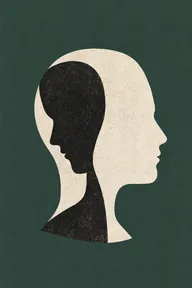
His illustration is the familiar drawing that appears either as a vase or two facing profiles. The marks remain unchanged, while their meaning changes with the viewer’s orientation. Likewise, seeing someone as an organism produces a different account from meeting them as a person with intentions.
This is the foundation of his existential-phenomenological approach: reconstruct how someone experiences themselves within their world of relationships. Published originally in 1960, the study follows selected forms of divided experience. Laing explicitly leaves biological causes outside its scope and offers neither a complete theory of schizophrenia nor a treatment manual. The reader’s task is to keep that limited purpose in view.