Sift Get the app
Introduction
What we lose when life gets frictionless
A rented friend costs forty dollars an hour. A cashier-free store saves a few minutes. Noreena Hertz connects these ordinary transactions to a larger question: what happens when everyday life stops requiring us to need each other?
This is the lonely century
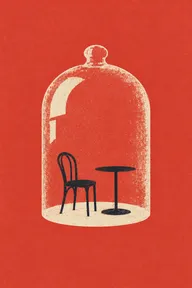
Loneliness reaches beyond your circle of friends
Feeling lonely can mean having nobody to call. It can also mean believing your employer considers you disposable or your government has abandoned you. Hertz uses this broader definition to connect private distress with economic exclusion and political powerlessness. Solitude, by contrast, can be freely chosen and satisfying.
Her afternoon with Brittany, a twenty-three-year-old hired through RentAFriend for forty dollars an hour, makes the distinction tangible. Brittany’s customers include overworked professionals who have little time to build friendships. Elsewhere, Hertz describes elderly Japanese women committing petty crimes partly to obtain the company and care available in prison.
COVID-19 intensified an existing crisis. Hertz traces its roots partly to neoliberal capitalism’s celebration of self-reliance and competition, alongside growing inequality and weakened public services. This is her organizing political interpretation, rather than a single experimentally established cause. Its practical consequence is demanding: making more friends cannot by itself repair institutions that leave people feeling unsupported.