Sift Get the app
Introduction
Your repeated thoughts become your lived reality
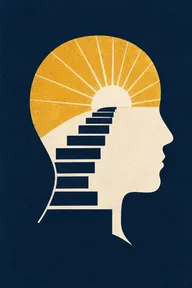
Murphy’s core idea is blunt: the subconscious mind does not argue, evaluate, or fact-check. It accepts what you repeatedly impress on it and then works to express that pattern as behavior, emotion, health, relationships, and results.
That makes this book less about mystical power than about mental conditioning. The same inner mechanism can produce confidence or panic, healing or stress, wealth consciousness or chronic lack. Murphy’s obsession is practical: what are you telling yourself all day, and what is that training your deeper mind to do?
The treasure house within you
Your subconscious takes orders from your habitual thoughts
Murphy treats the mind as dual in function. The conscious mind chooses, reasons, and judges. The subconscious mind accepts what the conscious mind repeatedly treats as true and then carries it out. His central metaphor is a garden: thoughts are seeds, the subconscious is the soil, and the harvest is your life conditions.
That is why he warns against casual phrases like “I can’t afford it” or “I can’t do this.” To him, these are not harmless expressions. They are instructions. The subconscious does not debate them. It works to make them real. By contrast, a deliberately planted belief such as health, peace, or prosperity becomes a pattern the mind starts to realize.
One small story captures the logic. A student named Nina saw an expensive leather bag she could not afford. Instead of finishing the usual inner script of lack, she reversed it and said, “That bag is mine. It is for sale. I accept it mentally.” Later that day, her fiancé gave her the same bag as a gift. Murphy uses the story not to promise magic shopping, but to show expectancy replacing negation.
Takeaway
The subconscious is not persuaded by logic as much as it is programmed by repetition, feeling, and acceptance.