Sift Get the app
Introduction
You can restart a game, not a friendship
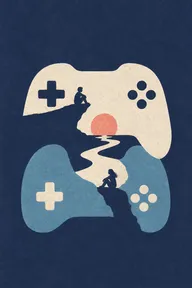
Sam and Sadie can build worlds together, yet struggle to understand each other outside them. Their decades-long partnership turns video games into a language for love, with consequences neither can control.
I. Sick kids
Play makes trust possible before words do
A shared game gives Sam Masur and Sadie Green a way to approach pain without demanding explanations. They meet as children in a Los Angeles hospital: Sadie’s sister Alice has leukemia; Sam has survived the car accident that killed his mother and shattered his foot. He has barely spoken for six weeks. Playing Super Mario Bros. with Sadie brings him back into conversation.
Their friendship breaks when Sam discovers that Sadie has logged their visits as community service for her Bat Mitzvah. She needed twenty hours and recorded 609. For Sadie, the tally became a game alongside a genuine friendship. For Sam, already sensitive to poverty and dependence, it makes their intimacy look like charity.
They reconnect in a Cambridge subway station in 1995. Sadie gives Sam Solution, her disturbing game about manufacturing parts for the Third Reich. Its highest-scoring players lose morally. When she subsequently withdraws into depression, Sam repeatedly visits, following his roommate Marx Watanabe’s advice. Their renewed closeness begins with food and patient company. Being able to interpret someone’s game still leaves much of their suffering unknown.
“To design a game is to imagine the person who will eventually play it.”