 Sift Get the app
Karl Marx book summaries
Karl Marx (1818, 1883) was a German philosopher, journalist, and revolutionary socialist. He developed historical materialism, an approach to understanding social change through material conditions and class struggle. His ideas became the foundation of Marxism and influenced political movements and debates about how societies are organised.
Marx co-wrote The Communist Manifesto with Friedrich Engels, arguing that capitalism would ultimately be replaced by communism. In Capital, he examined capitalist production and the relationship between labour and profit. Wage-Labour and Capital and Value, Price and Profit explore wages, economic value, and what workers produce. Alongside The Marx-Engels Reader, these works introduce his broader critique of capitalism as both an economic system and a way of organising social life.
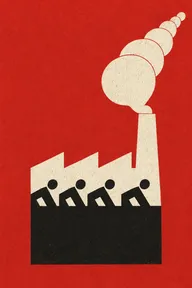 Capital Capital says profit is unpaid labor made invisible
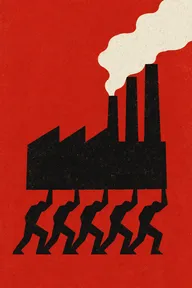 The Communist Manifesto Capitalism makes its own gravediggers
 The Marx-Engels Reader Capitalism is not just an economy. It is a way of organizing human life.
 Wage-Labour and Capital & Value, Price and Profit Your wage is not the value of what you produce