Sift Get the app
Introduction
Your wage is not the value of what you produce
Marx’s core move in these two essays is brutally simple: workers do not sell labour itself, they sell labour-power, and that difference explains profit. Once you see it, wages stop looking like a fair share of output and start looking like the price of staying alive long enough to work again.
That is why these short texts still matter. They turn familiar arguments about pay, prices, strikes, and competition inside out, and they do it with concrete examples: machinists, weavers, factory laws, agricultural wages, and the daily tug of war between capital and labour.
Introduction
Capitalism begins with a strange bargain
Marx starts from an odd fact that everyday economics usually hides in plain sight. On one side stands a class that owns tools, machinery, raw materials, land, and money. On the other stands a class that owns only its capacity to work. That arrangement is not natural or eternal. It is a social relation, and it sets the terms of everything that follows.
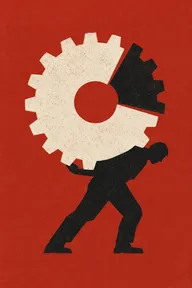
In this arrangement, the worker does not meet the capitalist as an equal producer swapping finished goods. The worker must sell labour-power in order to live. That is what makes wage-labour different from slavery and serfdom. The slave is sold once and for all. The serf owes tribute tied to the land. The wage-worker is formally free, but must repeatedly sell slices of life to the capitalist class to survive.
That distinction matters because it shifts the question from individual fairness to the structure of the system. If your only source of income is selling your capacity to work, then wages are not simply payment for effort. They are the price of a commodity that capitalism needs in order to reproduce itself.
Takeaway
For Marx, capitalism is not just markets and trade. It is a social order built on a class that must sell labour-power to a class that owns the means of production.