Sift Get the app
Introduction
History feels different when it is told as one continuous human story
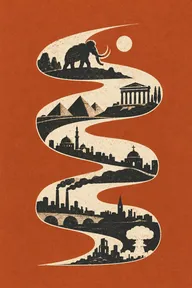
Gombrich turns world history into a single readable arc, from mammoths and the Nile to Napoleon, world war, and the atomic bomb. Instead of burying you in dates, he keeps asking the simplest useful questions: what changed, who gained power, what people believed, and how one era slid into the next.
That makes this book unusually good at orientation. You come away with a map in your head: why Greece mattered, how Rome spread, why monotheism changed history, how Islam erupted onto the scene, why Europe industrialized, and how modern states and mass war emerged from choices that once looked temporary.
Once upon a time
History starts with memory, then reaches past it
Gombrich opens with a childlike but serious insight: every "once upon a time" has another one behind it. Personal memory leads to family memory, then to letters, archives, ruins, bones, and finally to a past no one can directly remember. That is where history begins, and where prehistory shades into geology and the deep history of life.
“Our memory is like that burning scrap of paper. We use it to light up the past.”
He uses vivid images rather than formal definition. Memory is like a burning scrap of paper dropped into a well, briefly lighting the walls before vanishing into darkness. That image does two jobs at once. It reminds the reader how little we can directly see, and why historians must rely on traces.
The practical effect is that history becomes less about memorizing dates and more about learning how humans know what they know. Fossils, tools, scripts, buildings, laws, and stories all become evidence. That way of seeing prepares the reader for everything that follows, from mammoth hunters to modern states.