Sift Get the app
Introduction
Stop trying to predict shocks. Build a life that gets stronger from them.
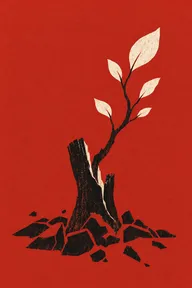
Most people aim for resilience: survive uncertainty, absorb shocks, stay standing. Taleb says that is not enough. The real edge belongs to things that improve when stressed, surprised, or shaken. He calls that quality antifragility.
That shift changes how you think about risk, health, business, politics, and even ethics. Instead of asking what will happen next, ask a harder and more useful question: if I am wrong, what happens to me? Or to everyone else?
The core idea
Fragile breaks, robust resists, antifragile benefits
A glass is fragile. It wants calm, predictability, and careful handling. A sturdy object is robust: shocks do not improve it, but they do not break it either. Antifragile is the missing category. It names things that gain from disorder, volatility, errors, and stressors.
Taleb's favorite images make the point fast. Damocles is fragile, living under a sword held by a horsehair. The phoenix is robust, returning to where it started after destruction. The Hydra is antifragile: cut off one head and two grow back. The difference is not poetic decoration. It is a practical way to classify systems.
That is why Taleb keeps returning to one test: does randomness mostly hurt this thing, leave it unchanged, or help it? Your answer tells you more than any forecast. He would rather detect fragility than predict the exact shock that exposes it.
Takeaway
The opposite of fragile is not robust. It is something that gets better from stress.