 Sift Get the app
Introduction
When his skin changed, America changed with it
John Howard Griffin darkened his skin in 1959 and traveled through Louisiana, Mississippi, Alabama, and Georgia as a Black man. The same streets, stores, buses, and churches became a different country almost overnight.
Black Like Me still matters because it strips racism of abstraction. Griffin does not debate prejudice at a distance. He records the daily humiliations, threats, courtesies, lies, and moral evasions that segregation required from everyone who touched it.
The experiment
Passing into Blackness shattered Griffin's idea of himself
Griffin begins with a dangerous premise: if white America will not believe testimony about Southern racism, perhaps it will believe a white man who temporarily becomes Black. With medical supervision, ultraviolet light, and medication, he darkens his skin, shaves his head, and leaves New Orleans to enter the world whites had fenced off.
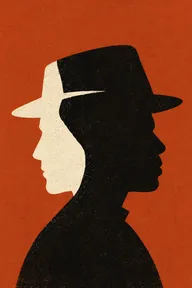
The first shock is not political but existential. Looking in the mirror after the transformation, he feels the old self disappear. The book lingers on that moment because race is not presented as a costume. Once the world reads him as Black, his body, posture, fears, and possibilities all change. He writes that the man in the mirror was not someone he merely disguised himself as, but someone the world would force him to become.
“The Griffith I had been was wiped from existence.”
That is the book's first hard lesson: social identity is not only how you see yourself. It is what strangers are permitted to do to you. Griffin enters the experiment wanting evidence. Very quickly, he is living inside it.





