 Sift Get the app
Introduction
What an IQ score leaves out
A master navigator can cross open ocean without instruments. A gifted musician may struggle with ordinary conversation. Gardner asks what these uneven abilities reveal about intelligence, and what schools miss when they measure everyone the same way.
1. Multiple intelligences
Start with what people can actually do
Human intelligence looks different when the starting point is skilled performance rather than a test score. Gardner introduces a Puluwat apprentice navigator, an Iranian student memorizing the Koran, and a Parisian teenager composing music with a computer. Each faces demanding problems that a conventional IQ test would barely sample.
His proposed definition centers on solving problems or creating products valued within a cultural setting. That shifts attention toward the abilities a community develops and rewards. School achievement remains one legitimate concern, but it cannot stand for the whole range of human competence.
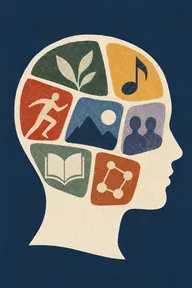
Gardner proposes seven relatively autonomous intelligences, usually working together. He explicitly presents their independence as a scientific hypothesis requiring investigation. The practical starting point is to ask which abilities a task reveals, and which abilities its format prevents someone from showing.





