Sift Get the app
Genghis Khan and the Making of the Modern World summary
Introduction
The conqueror behind a connected world
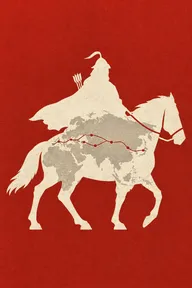
Genghis Khan destroyed cities, yet his empire also carried doctors, merchants, and ideas across Eurasia. Jack Weatherford traces how those connections grew from conquest, and why the familiar image of the barbarian leaves so much unexplained.
Introduction: The missing conqueror
Recovering a history that became dangerous
Genghis Khan’s reputation was shaped partly by who could tell his story. Foreign chroniclers recorded his invasions, while the Mongols’ own account, The Secret History of the Mongols, survived through a text using Chinese characters to represent Mongolian sounds. Recovering its meaning required generations of scholarship.
Studying that history could be dangerous. Weatherford describes Communist persecution of Mongolian scholars and the closure of Genghis Khan’s homeland to outsiders. After Mongolia opened in 1990, he worked with local researchers to compare written accounts with the actual landscape, including seasonal travel conditions.
The resulting interpretation gives Mongols a larger place in world history: their conquests created channels through which knowledge moved between civilizations. This is a deliberately corrective account. Its strongest distinction is between inventing a technology and building the connections that allow it to spread.