Sift Get the app
Introduction
What survives when power controls your memories?
Winston Smith secretly records facts his government insists never happened. His rebellion begins with a diary, but its hardest test concerns something he believes no regime can reach: his feelings for another person.
The watched life
Surveillance makes people police themselves
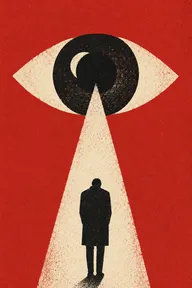
Winston Smith lives in a London where the telescreen broadcasts propaganda while watching and listening. Nobody knows when the Thought Police are connected. That uncertainty trains Party members to control every expression, even when they appear to be alone.
At thirty-nine, Winston works for the Ministry of Truth and lives in the decaying Victory Mansions. The contrast between triumphant announcements and broken lifts establishes the texture of Oceania: official greatness coexists with daily deprivation. During the Two Minutes Hate, even Winston's private contempt cannot protect him from joining the crowd's frenzy.
His first deliberate rebellion is opening a diary in an alcove outside the telescreen's field of vision. Writing gives his private judgment a physical existence. Yet his fearful suspicions about a dark-haired colleague also show how thoroughly surveillance has damaged his ability to read other people.