Sift Get the app
Introduction
What if the modern world did not begin with Greece
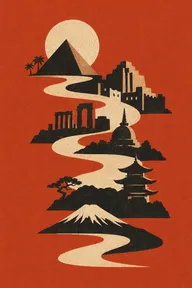
Will Durant starts with a provocation that still lands: the roots of modern life run far deeper into Egypt, Mesopotamia, India, China, and Japan than the usual Western story admits. Writing, law, cities, trade, religion, mathematics, medicine, and art were not invented by a single civilization. They were accumulated across centuries of experiment, conquest, and cultural borrowing.
That makes this book more than a tour of ancient kingdoms. It is an argument about perspective. If you begin history with Greece, you miss the background that made Greece possible, and you misunderstand how civilizations rise, spread, decay, and hand off their achievements to one another.
Introduction
Civilization is a fragile achievement, not a permanent possession
Durant defines civilization with unusual bluntness: social order promoting cultural creation. He reduces it to four essentials: economic provision, political organization, moral traditions, and the pursuit of knowledge and the arts. Civilization begins where chaos and insecurity end. Only when food, order, and habit make life stable do curiosity, beauty, and thought get room to grow.
He is equally direct about how civilizations die. Climate shifts, exhausted soil, epidemics, changing trade routes, class conflict, concentrated wealth, and moral or political decay can undo centuries of accumulated order. His point is severe but memorable: civilization is not something inborn or imperishable. Every generation has to acquire it again.
That is why he starts not with kings but with conditions. If you want to understand any high culture, you first ask what geography permitted it, what economy sustained it, what institutions disciplined it, and what beliefs transmitted it.
Takeaway
For Durant, civilization is an interlude won against fear, scarcity, and disorder, and always vulnerable to collapse.