 Sift Get the app
Introduction
Your clarity can feel like someone else’s hostility
A blunt answer can sound efficient to the speaker and brutal to the listener. Thomas Erikson uses four behavioral colors to examine why familiar communication habits create friction, including habits we rarely question in ourselves.
Communication and behavior
The listener determines what your message becomes
Your intended meaning passes through another person’s expectations before it becomes their understanding. Erikson’s starting point is to adjust how you communicate rather than assume that anyone who misunderstands you lacks intelligence.
“Communication Happens on the Listener’s Terms”
His cautionary example is Sture, a business owner who calls his employees idiots. Staff avoid him and conceal bad news. One office even installs a warning light indicating whether he is present. His contempt cuts him off from information he needs.
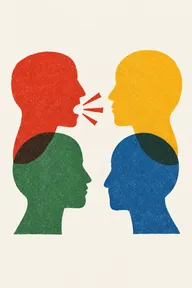
Erikson introduces DISA, also commonly called DISC, through four colors. Red and Yellow are faster-paced; Green and Blue are more reflective. Red and Blue focus on tasks; Yellow and Green focus on relationships. These describe behavioral tendencies, with most people combining colors. Situation also matters: your behavior at work can differ from your behavior at home.





