Sift Get the app
Introduction
Your AI can serve someone else's interests
Your phone already extends your memory and steers your choices. Amir Husain follows that relationship into AI-managed companies and autonomous warfare, asking who will own the systems becoming part of us.
1. The origins of cybernetics
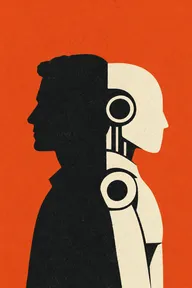
Study the human and machine as one system
A recommendation changes your decision, your action produces new data, and the software learns from the result. Cybernetics studies this entire feedback loop. Norbert Wiener and Arturo Rosenblueth helped establish the field by treating human operators and machines as components of a connected system.
Husain applies that perspective to algorithmic trading: a prediction that prices will fall can prompt selling that actually drives prices down. George Soros's concept of reflexivity captures the circular causation. Once a prediction influences behavior, it participates in creating the outcome it describes.
Human oversight offers no automatic escape from error. Drawing on Kahneman and Tversky, Husain points out that people use shortcuts and rationalize decisions afterward. His proposed response borrows from computing: error correction. Independent checks and redundant information could help institutions detect failures across the combined system. Evaluate how the whole arrangement corrects mistakes, rather than assuming either its human or machine component deserves trust.
Takeaway
Judge a human–AI system by its feedback and correction mechanisms, not by the presence of a human supervisor alone.