Sift Get the app
Introduction
A prison system became a country inside the country
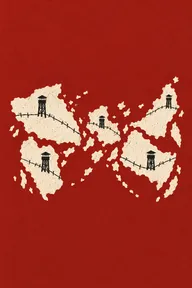
Solzhenitsyn does not describe the Gulag as a set of prisons. He describes it as an archipelago: a hidden nation of camps, transit prisons, exile settlements, convoy routes, informers, and labor sites spread across the Soviet map. Millions passed through it, and the rest of the country was shaped by its fear, language, and moral rot.
What makes this book so hard to shake is not only the scale of state violence. It is the way terror becomes ordinary administration. Camps need timber, canals, railroads, quotas, guards, stool pigeons, and slogans. The system is not a breakdown. It is a system that works exactly by degrading the human beings inside it and corrupting the society around it.
Origins
The camps did not begin as a deviation but as a built-in feature
Solzhenitsyn starts by pushing the origin of the Gulag earlier than most people expected. Not 1921, not after Stalin, but right after the October Revolution. He quotes Lenin on "draconic measures" and forced labor, then traces how the new state rapidly built courts, prisons, police, and concentration camps. The logic was visible from the first months: a dictatorship that claims to refashion society cannot do without a machinery of compulsion.
He makes the point with dates and decrees. The decree on Red Terror of September 5, 1918 orders class enemies to be isolated in concentration camps. Lenin's August 1918 telegram to Penza tells officials to lock up "all the doubtful ones" in a concentration camp outside the city. By 1920 there were already 84 camps in 43 provinces. By 1923 there were 355 camps holding over 68,000 people, plus reformatories, prisons, and colonies.
The practical implication is stark: if you want to understand the Soviet camp system, stop treating it as a late accident or a personal distortion. Solzhenitsyn wants you to see continuity. The Gulag was not an afterthought to the state. It grew with the state.
Takeaway
The Gulag was present in embryo from the start because coercion was part of the political design, not a later malfunction.