Sift Get the app
Introduction
Most of what you eat traces back to corn, oil, and a handful of hidden choices
Pollan starts with a question that sounds ordinary and turns out to be civilizational: what should we have for dinner? His answer is that you cannot answer it honestly until you know where food comes from, what systems produced it, and what those systems are doing to bodies, landscapes, animals, and culture.
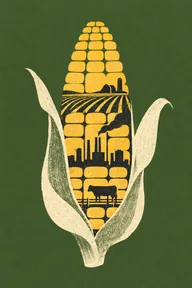
The shock of this book is not just that industrial food is unhealthy or opaque. It is that eating is never merely personal. A fast food lunch reaches back to Iowa cornfields, feedlots, fertilizer plants, oil wells, slaughterhouses, and government policy. Pollan makes dinner look political, ecological, and moral all at once.
Introduction
America has turned eating into a confusion problem
For an omnivore, deciding what to eat has always involved risk. Humans can eat almost anything, which means we also need ways to distinguish what nourishes us from what harms us. Traditional food cultures solved this with inherited rules, habits, cuisines, and taboos. Pollan's point is that America largely lost that stabilizing culture and replaced it with experts, labels, fads, and anxiety.
That helps explain the absurdity of modern eating. One decade fat is the enemy, the next decade carbs are. Bread disappears from the table almost overnight. Nutrition becomes a rolling panic, and the supermarket becomes a landscape full of products nobody can confidently identify. Pollan calls this a national eating disorder.
“Eating is an agricultural act.”
His wager is that the best way to answer the dinner question is to follow food chains from soil to plate. He traces three of them: industrial food, pastoral food, and food he hunts and gathers himself. The argument is not that every eater should become a farmer or forager. It is that knowing the chain changes what dinner means.