Sift Get the app
Introduction
The Amazon broke Theodore Roosevelt in ways politics never could
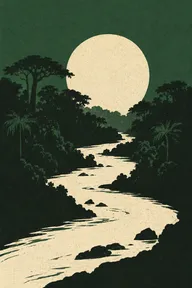
After losing the 1912 election, Theodore Roosevelt went looking for the hardest thing he could survive. He chose an unmapped tributary of the Amazon called the River of Doubt, a black, rapid-choked river that no white explorer had ever descended.
Candice Millard turns that choice into something bigger than adventure writing. This is a story about pride, grief, leadership, endurance, and the brutal gap between romantic ideas of wilderness and the reality of hunger, disease, bad planning, and human frailty.
Defeat
Roosevelt went to the Amazon because he could not bear political irrelevance
The expedition begins as a response to humiliation, not curiosity alone. Roosevelt loses the 1912 election badly after splitting from the Republican Party and running as a Progressive. Publicly he claims good humor. Privately he admits the defeat is overwhelming and confesses a loneliness that shocks even his friends.
Millard makes clear that this pattern ran through Roosevelt's whole life. When grief or failure hit, he answered with physical ordeal. As a sickly child with severe asthma, he built his body through punishing exercise. After his father died, he fled into the Maine woods. After his wife and mother died on the same day in 1884, he vanished into the Dakota Badlands. Hardship was not just something he endured. It was how he tried to redeem pain.
That is why South America matters. A speaking tour offered money, recognition, and a chance to see his son Kermit in Brazil. But the deeper draw was absolution through exertion. Roosevelt came to the Amazon hoping the wilderness would do what politics could not: strip away bitterness by forcing him into action.
Takeaway
For Roosevelt, exploration was never escape from politics. It was his preferred way of surviving defeat.