Sift Get the app
Introduction
A wildlife expedition becomes a test of whether you can let go of your life
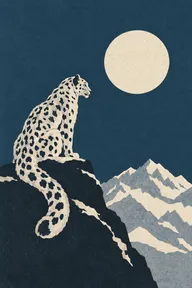
Peter Matthiessen goes to the Himalaya to look for the snow leopard with field biologist George Schaller. What he actually finds is a harder quarry: a way to live with grief, fear, and the restless self that keeps asking for more.
The Snow Leopard matters because it is travel writing, natural history, and spiritual autobiography all at once. The mountains are real, the wolves and blue sheep are real, the danger is real, and so is the inner drama of a man trying to meet loss without turning away.
Prologue
The journey begins as science and mourning in the same pack
In late September 1973, Matthiessen leaves for northwest Nepal with George Schaller, the zoologist known for his work on lions and mountain mammals. Schaller's mission is concrete: study the bharal, or Himalayan blue sheep, during the rut, when behavior may reveal whether this strange animal is truly more goat than sheep. The possibility of seeing a snow leopard is the great lure.
For Matthiessen, the trip is also a pilgrimage. He has recently lost his wife Deborah to cancer, and the journey to the Crystal Mountain, to Shey Gompa in remote Dolpo, becomes a journey through grief as much as geography. He heads toward what he calls a true pilgrimage, a journey of the heart.
That double motive gives the whole book its charge. Schaller wants data. Matthiessen wants clarity, or consolation, or perhaps something beyond both. The practical expedition and the inner search do not cancel each other. They intensify each other.
Takeaway
The book works because the outer expedition is exact and physical, while the inner expedition never stops asking what such a journey is for.