Sift Get the app
Introduction
Survival is not heroic. It is procedural.
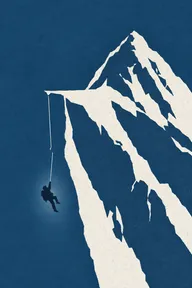
Touching the Void is famous for the moment when Simon Yates cuts the rope to save his own life and Joe Simpson disappears into the mountain. The real power of the book is what comes after: a brutally detailed account of how survival often looks less like courage and more like tiny, stubborn actions taken while fear, pain, and reason are breaking down.
What makes the story endure is not just that Simpson lived. It is that the book turns an almost impossible ordeal on Siula Grande in the Peruvian Andes into a study of judgment under pressure, the ethics of loyalty, and the strange split between the part of the mind that panics and the part that keeps moving.
Base camp
Adventure starts with confidence and hidden fragility
Joe Simpson and Simon Yates arrive in the Cordillera Huayhuash aiming for the unclimbed West Face of Siula Grande, a 21,000 foot peak in the Peruvian Andes. They acclimatize on nearby routes, fail on a few objectives, and slowly convince themselves they have what matters most: fitness, a working read on the weather, and trust in each other as a two-man team.
That confidence is real, not naive. They test the afternoon storm cycle, learn that not every cloud build-up means retreat, and grow sharper with each climb. Yet Simpson plants an important warning early: in remote mountains there is no rescue, no helicopter, no safety net, just the consequences of each decision.
The practical implication is simple and brutal. Competence lowers risk, but it never removes fragility. The moment you start feeling fully in control is often the moment conditions are quietly storing up a bill you have not yet seen.
Takeaway
Preparation matters, but remote risk compounds fast when there is no backup beyond your partner.