Sift Get the app
Introduction
Travel can teach you how to read history, and history can teach you how to survive the world
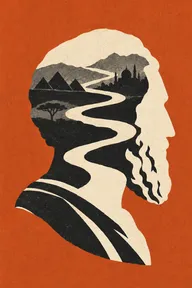
Ryszard Kapuscinski turns a simple reporter's gift into a lifelong method: leave home, cross borders, pay attention, and carry a great book with you. In his case that book is Herodotus, whose ancient investigations become a working companion through India, China, Africa, and the wreckage of the 20th century.
What emerges is not a travel memoir in the ordinary sense. It is a meditation on memory, empire, fear, translation, power, and the problem of understanding people who live in worlds unlike your own. Kapuscinski keeps discovering that the foreign country and the ancient text are asking the same question: how do humans make sense of a reality that is always larger, stranger, and more dangerous than they expect?
Crossing the Border
The first real journey begins before you know what you are looking for
Kapuscinski's earliest hunger is not for Paris or adventure in the abstract. It is for one act: crossing the border. Growing up in postwar Poland, among ruins, censorship, and material scarcity, he experiences the border as something almost mystical. He wants to know what happens to a person when he steps from one world into another.
That desire leads to an absurd stroke of luck. After telling his editor he would someday like to go abroad, perhaps only as far as Czechoslovakia, he is suddenly sent to India. Before leaving, his editor gives him a thick yellow-cloth volume: Herodotus' The Histories. That gift matters because it gives form to what would otherwise be shock without interpretation.
The first border he truly crosses is mental. Rome overwhelms him with light, abundance, and public life. Stores are full, cities glow at night, people sit in cafes for pleasure. He discovers that political systems shape not only institutions but posture, clothing, speech, and even what seems imaginable. Crossing the border is not tourism. It is the realization that your own world was only one version of reality.
Takeaway
A border is never just a line on a map. It is a test of how much of your worldview was local habit mistaken for truth.