Sift Get the app
Introduction
A house can become a new way to live
Frances Mayes buys a decaying villa outside Cortona, spends her savings restoring it, and discovers that the real renovation is not the house but her own life. Under the Tuscan Sun is about land, meals, walls, olive trees, churches, weather, and the slow shock of belonging somewhere you did not expect to belong.
What makes the book endure is that it is not fantasy real estate porn. It is dust, plumbing failures, scorpions, dry wells, stone walls, bureaucracy, and hard labor, alongside beauty so intense it rearranges perception. Tuscany matters here not as backdrop but as a force that changes taste, time, work, memory, and identity.
Bramasole
The irrational leap can be the right one
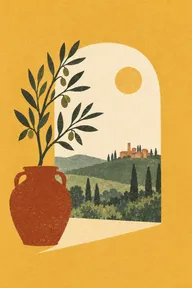
Mayes falls for Bramasole at first sight: an abandoned apricot-colored house on a terraced hillside near Cortona, with olive trees, fruit trees, a Roman road nearby, and a view into the Val di Chiana. Everyone around her thinks buying it is absurd. The price is high, the legal process is bewildering, the wiring is archaic, the bathrooms are makeshift, and the place has been empty for decades.
What steadies the leap is not logic but recognition. She has spent years renting houses around Tuscany, learning the villages, markets, roads, and rhythms, and Bramasole feels like a place that says yes. The decision is tied to a larger personal turning point too: after the end of a long marriage, she wants not just a property but a life with a new physical and imaginative dimension.
The book never pretends this instinct is safe. She lies awake calculating disasters, illness, market crashes, earthquakes, and the absurdity of spending her savings in a country whose rules she barely understands. But Mayes keeps returning to a harder truth: sometimes uncertainty is not a warning but the feeling of a life opening.
“What if the sky doesn't fall? What if it's glorious?”