Sift Get the app
Introduction
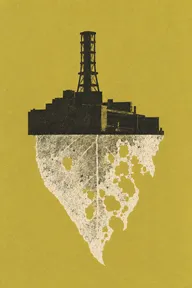
Chernobyl was not just an explosion. It was a new kind of human experience.
Most disaster books explain what happened. Voices from Chernobyl shows what it felt like to live inside something language was not built for: invisible poison, delayed death, official lies, abandoned homes, and grief so strange it no longer fits the old stories of war.
Svetlana Alexievich builds the book out of monologues, not analysis. Firemen's wives, liquidators, villagers, refugees, and returnees speak in their own rhythms. What emerges is not a single account of the accident, but a map of how ordinary people tried to understand a catastrophe that entered the body, the soil, the food, memory, and love itself.
Historical note
The scale was national in Belarus and global everywhere else
Chernobyl happened on April 26, 1986, when explosions destroyed Reactor 4 of the Chernobyl Nuclear Power Station. Alexievich opens by making the scale concrete. Belarus had no nuclear plants of its own, yet it absorbed most of the fallout. According to the historical note, 70 percent of the released radionuclides fell on Belarus, and 23 percent of the country's territory was contaminated with cesium-137 above 1 Ci per square kilometer.
The numbers matter because they break the comforting idea that Chernobyl was a local accident. Belarus lost 485 villages and settlements, 70 of them buried forever underground. About 2.1 million people lived on contaminated land, including 700,000 children. Within days, radioactive particles had been detected across Europe, then in Japan, India, the United States, and Canada.
Alexievich also reminds you that the catastrophe did not end with the explosion. The reactor was sealed inside the sarcophagus, yet even that structure was cracked and unstable. The danger remained unfinished, physically and politically. Chernobyl becomes the story of a disaster that keeps radiating outward, long after the event itself is over.
Takeaway
Chernobyl was not a moment. It became a long emergency that changed land, bodies, and history for decades.