Sift Get the app
Introduction
A man survives the Gulag by walking out of it
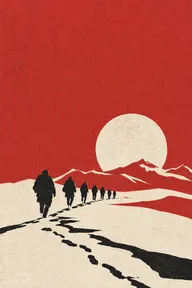
Slavomir Rawicz begins in a Soviet prison cell, brutalized by NKVD interrogators, then gets sentenced to 25 years of forced labor. Instead of accepting Siberia as the end of his life, he escapes Camp 303 with six other prisoners and starts south on foot.
What makes this memoir gripping is not just the scale of the journey, but the texture of survival: torture, cold, hunger, improvisation, friendship, death, and the refusal to stop moving. The route runs from the Lubyanka to Siberia, across the Gobi, through Tibet, and into India, and every stage asks the same question: what keeps a person alive when almost everything has been taken away?
Arrest and interrogation
The first battle is not physical but psychological
Rawicz enters the story as a 24 year old Polish cavalry lieutenant arrested in Pinsk in November 1939 and swallowed by the Soviet prison system. In Minsk, Kharkov, and finally the Lubyanka in Moscow, he is pushed through a system built to erase identity before it destroys the body. The first humiliation is symbolic and practical at once: prison trousers without buttons or string, so the prisoner must keep one hand occupied just to hold them up.
The interrogations are less about facts than about breaking resistance. At Kharkov, the chief interrogator known as The Bull uses standing cells, sleep deprivation, beatings, a pistol butt that knocks out Rawicz's teeth, cigarette burns, knives, dripping water, and endless pressure to sign a document he is never allowed to read. Rawicz's core insight is simple and life saving: if he signs, he is probably signing his own death warrant.
“You will sign, you know. Some day you will sign.”
What keeps him alive is not hope in justice but a stripped down survival logic. He realizes the Soviets do not really know much about him. Their accusations are broad and ideological, built on the assumption that a well educated Pole near the Russian border must be a spy. His practical lesson is brutal: under totalitarian systems, innocence is irrelevant, so endurance depends on refusing the lie that will finish you.
Takeaway
Rawicz survives torture by holding one fixed thought: confession is more dangerous than pain.