Sift Get the app
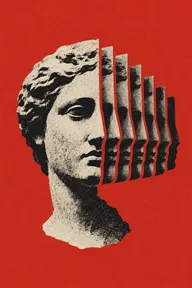
The Work of Art in the Age of Mechanical Reproduction summary
Introduction
What changes when everyone can own the image?
A cathedral can enter your living room as a photograph, but something stays behind. Walter Benjamin follows that loss into cinema, celebrity, and the disturbing possibility that mass audiences can learn to enjoy their own destruction.
I: Reproduction
A new copying technique changes the art itself
Copying has always belonged to art. Pupils imitated masters, and the Greeks cast bronzes and stamped coins. Mechanical reproduction introduces a different scale and speed. Lithography lets graphic images follow daily life; photography transfers much of image-making from the drawing hand to the eye looking through a lens.
Benjamin traces a convergence: pictures become fast enough to keep pace with speech, while sound itself becomes reproducible. Around 1900, reproduction can circulate inherited artworks and generate new forms, especially film. The question becomes what these techniques do to art’s public role. His Marxist starting point is that changes in production eventually transform culture, making inherited ideas of genius and eternal value inadequate tools for understanding the new situation.