Sift Get the app
Introduction
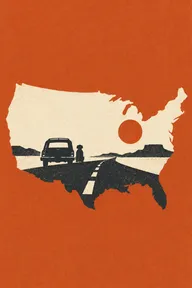
You do not take a trip. A trip takes you.
Steinbeck sets out at fifty-eight to rediscover America because he no longer trusts memory. Cities like New York are not the country. Newspaper headlines are not the country. If he is going to write about America, he wants to hear its speech again, smell its trees and sewage again, and see what twenty-five years have done to it.
What he finds is stranger than a travel diary. The book becomes a study of loneliness, movement, fear, waste, racial hatred, regional identity, and the weird sameness spreading across a huge nation. Charley, his French poodle, is the comic sidekick, but the real subject is a writer trying to decide whether America can still be seen clearly at all.
Setting out
Restlessness is not cured by age
Steinbeck opens with a confession that age has not made him settled. As a boy he was told maturity would cure the urge to go. Then middle age was supposed to do it. At fifty-eight, he knows the diagnosis was wrong. Four blasts from a ship whistle still set his blood moving. The old desire remains, and he treats it as a permanent condition.
“We do not take a trip; a trip takes us.”
That matters because the trip is not tourism. Steinbeck believes a journey becomes its own creature, with a personality and a will. You can plan a route, pack supplies, and make reservations, but once it starts, the trip takes over. He writes that the surest way to misunderstand travel is to think you control it.
So he builds a truck camper to travel alone, self-contained, like a turtle carrying its house. He names it Rocinante, after Don Quixote's horse, and brings one companion, Charley, a ten-year-old poodle born near Paris. Charley is practical where Steinbeck is romantic, and their pairing gives the book both comedy and ballast.
Takeaway
The book begins with a useful correction. Travel is not just movement through space. It is a surrender of control to whatever the road reveals.