Sift Get the app
Introduction
A pilot, horse trainer, and hunter wrote one of the finest memoirs in English
West with the Night turns a life that sounds impossible on paper into something vivid, funny, and exact. Beryl Markham writes about growing up in British East Africa, training racehorses, scouting elephants by air, and flying across the Atlantic, but the real achievement is not the résumé. It is the voice.
What makes this book endure is the way Markham sees. She can make a dirt runway, a lion charge, a sick miner, a foal being born, or a solo night flight feel equally alive. The result is both adventure story and meditation on freedom, danger, memory, and what it means to belong to a place.
Book One
Memory begins with a flight into danger
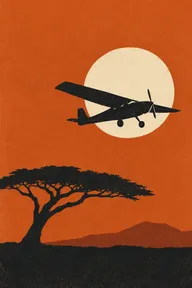
Markham opens not with childhood but with work. She is a freelance pilot in East Africa, asked in the middle of the night to fly oxygen to a dying miner in Nungwe while another pilot, Woody, is missing somewhere over the Serengeti. That choice immediately defines her world. Flying is not glamour. It is duty, improvisation, solitude, and constant judgment under pressure.
“Africa is all these things but one thing - it is never dull.”
The landscape matters because it determines everything. Roads vanish into mud, maps are unreliable, radio is absent, and vast stretches are simply unsurveyed. In that setting, an airplane is not convenience but survival. Markham's account of taking off into darkness with only flares, instinct, and a compass shows how aviation in East Africa was still half exploration.
Her search for Woody becomes a lesson in perception. She scans the Serengeti from the air, mistaking rocks and shadows for wreckage until she finally recognizes a glinting shape as a downed Klemm monoplane. Woody is alive, stranded beside an intact plane, and the rescue feels almost casual in the telling. That understatement is part of the book's power. The practical implication is simple: competence looks calm from the outside, but it is built from repeated contact with uncertainty.
Takeaway
Markham treats adventure as work done well under bad conditions, not as spectacle.