Sift Get the app
Introduction
A revolution looks different when you are ten years old
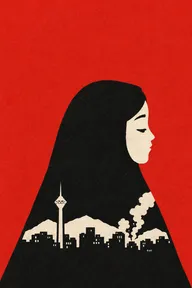
Persepolis turns the Iranian Revolution and the Iran-Iraq War from distant history into a child's daily life: school uniforms, family arguments, neighborhood bombings, black-market posters, and the sudden disappearance of people you love. Marjane Satrapi makes politics feel concrete because it lands in the smallest places first.
That is why the book still hits. It is not just a memoir about Iran. It is a lesson in how ideology enters the home, how war distorts childhood, and how a girl learns to think for herself while every institution around her tries to do the opposite.
The Veil and The Bicycle
Political upheaval first arrives as confusion, not clarity
Satrapi begins with a child's bewilderment. In 1980, after the revolution, the veil becomes mandatory at school, boys and girls are separated, and bilingual schools are shut down as symbols of capitalism and decadence. For the adults, these changes belong to huge political battles. For ten-year-old Marji, they feel arbitrary, sudden, and absurd.
That childish confusion is the point. Marji is deeply religious, wants to be a prophet, and talks to God at night, but she also absorbs revolutionary slogans from her family. She turns herself into little versions of Fidel, Che, and Trotsky, chanting against the Shah in the garden. The revolution is not presented as a clean moral story. It is a swirl of faith, fantasy, anti-imperial anger, and family mythology.
“The revolution is like a bicycle. When the wheels don't turn, it falls.”
Satrapi's practical insight is that children do not experience ideology as theory. They experience it as dress codes, closed schools, and adults speaking with sudden certainty about things they barely explained yesterday. The book keeps asking what happens when political systems seize a child's imagination before they have the tools to judge them.