Sift Get the app
Introduction
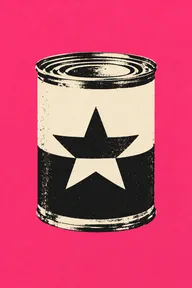
Warhol turns modern life into a philosophy of surfaces
Warhol treats shopping, fame, TV, sex, money, beauty, and boredom as more revealing than grand ideas. Instead of pretending culture is deep, he asks what people actually do all day: what they buy, who they call, how they wait, what they stare at, and what they are too embarrassed to admit.
That makes this book feel unexpectedly current. Warhol sounds like someone who understood the attention economy before the internet existed: the self as image, relationships as media, work as performance, and consumption as identity. The result is funny, cold, strange, and often more honest than respectable philosophy.
B and I
Identity is something you perform, archive, and outsource
Warhol opens with a running dialogue between A and B, one of the book's signature devices. A is Warhol, B is whoever helps him get through the day. That framing matters because Warhol does not present the self as stable or inward. He presents it as social, mediated, and partly assembled by other people, by mirrors, by scrapbooks, by phones, by TV, by what others say you are.
One of the sharpest lines comes early: he says he is "everything my scrapbook says I am." That sounds like a joke, but it is also his method. Image is not fake life sitting on top of real life. Image is one of the main ways life gets made. Fame, style, and selfhood are all built from repeated surfaces.
“I'm everything my scrapbook says I am.”
The practical implication is not that identity is meaningless. It is that we should notice how much of ourselves lives outside us: in records, habits, objects, and other people's attention. Warhol is unusually honest about how dependent the self can be on an audience, even a tiny one.